keyboard_arrow_rightkeyboard_arrow_left
Extremely rich in nutrients, spirulina is therefore especially recommended for dogs. It provides not only amino acids and fatty acids, but also antioxidants and enzymes. It consists largely of protein and is also low in calories and fat. It can help with certain health problems: for example, it can improve digestion because it suppresses dangerous intestinal bacteria (e.g. E-Coli) and stimulates good bacteria (e.g. lactobacilli). ). It also has a detoxifying effect and strengthens the immune system. The superfood can also help with allergies because it inhibits histamine production.
Spirulina provides dogs with a lot of vitamin A, which promotes vision and protects the skin. The iron content is also impressive. Microalgae contain about 50 times more iron than meat. And don't forget the countless minerals and trace elements: in addition to barium, boron and chromium, algae also contain cobalt, manganese and titanium. Let's take a look below at how these nutrients contribute to the health of our furry friends.
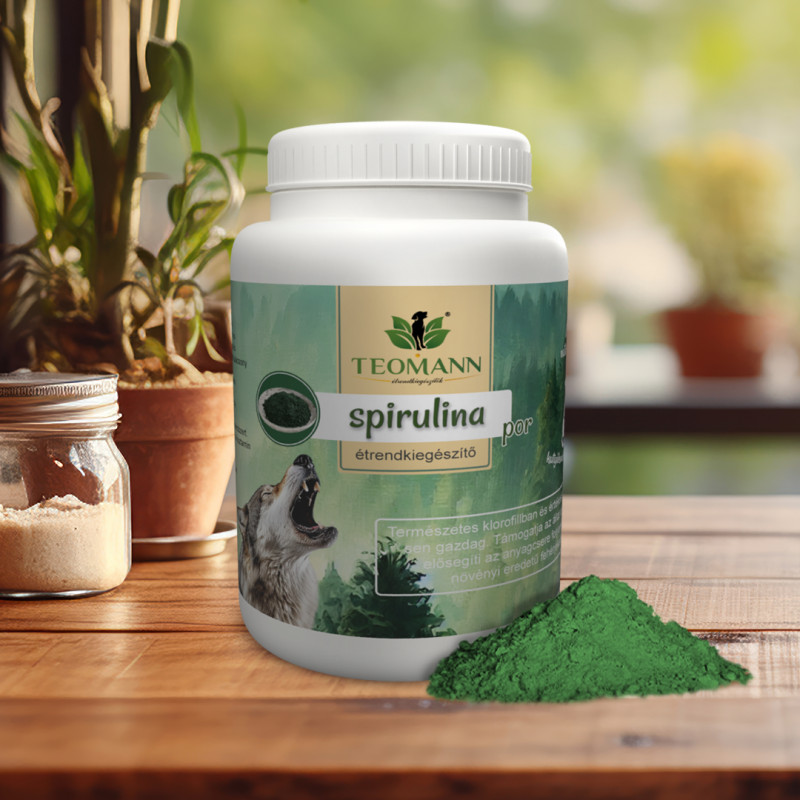
Analysis: Crude protein 66%, carbohydrates 10%, crude oils and fats 10.2%, glycosaminoglycans 3.0% and crude ash 6.9%
Before adding any supplements to your dog's diet, it is important to talk to your veterinarian.
Feeding recommendation:
1/2 kk/10kg b.w./day
Storage: Protected from light, in a dry, cool place
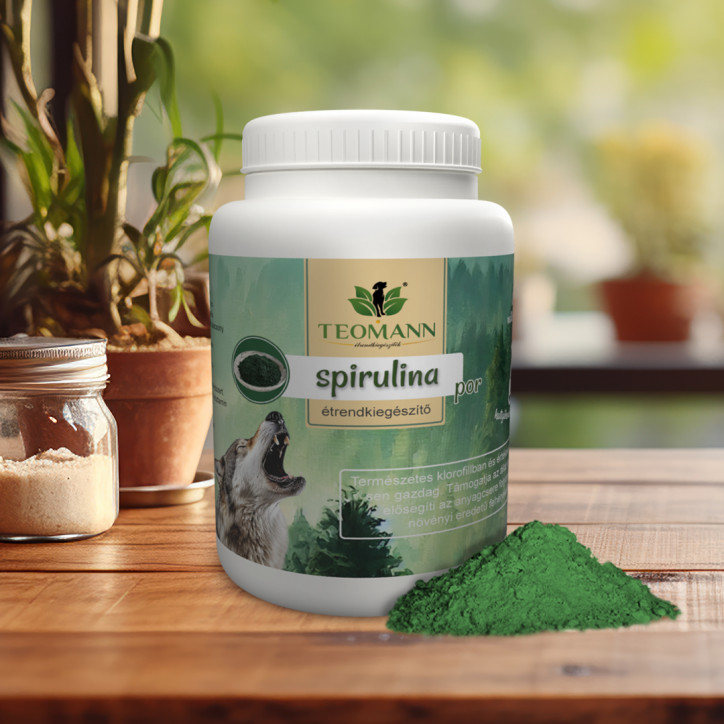
Spirulina is a microalgae or blue-green algae and contains a very high concentration of nutrients. More than half of the algae consists of proteins. Various vitamins, minerals, amino and fatty acids, trace elements, antioxidants and enzymes are found in primary algae.
The most important point is to improve the immune system.
The intake of spirulina causes higher cell activity. This leads to cell proliferation, which destroys pathogens at an early stage.
Especially four-legged friends with a weak immune system feel tired and sluggish. Because of this, they are easily susceptible to any disease. Strengthening the immune system and metabolism stimulates the vitality of your pet. Even a small amount of spirulina can have a positive effect on the general well-being of your four-legged friend.
So far, research has shown that spirulina promotes digestion and intestinal function.
Dangerous intestinal bacteria such as e-coli are suppressed. Fungi such as Candida are also kept under control by spirulina. While the growth of bad components of the intestinal flora is inhibited, the good ones, such as lactobacilli, are stimulated.
The intestine and its "inhabitants" are the basic building blocks of health. This is because all nutrients are absorbed through it. A healthy intestinal flora also enhances the absorption of nutrients.
Various laboratory studies have shown that spirulina filters out harmful substances from the body. In addition, algae can reduce damaged genetic material with the help of poisoning or radiation.
In animal studies, Spirulina has an anti-cancer effect. By stimulating the so-called natural killer cells and other components of the immune system, they attack cancer cells. It is assumed that the risk of skin, stomach, colon and liver cancer is reduced.
Spirulina is also said to be a helper in the fight against allergies. Certain components inhibit the production of histamine in the body. This ancient algae can therefore serve as a natural remedy for many allergies.
Due to its valuable composition and good tolerance, spirulina has a similar effect on the dog's body as it does on humans. So you can give your beloved spirulina to your pet without any problems. However, remember that every four-legged friend has an individual health condition. Therefore, it is always advisable to seek advice from a trusted veterinarian - even with dietary supplements.
Are there any side effects?
There are no known side effects when taking Spirulina - neither in humans nor in animals. Since the intake of spirulina has been documented for several centuries, there is actually no risk.
Specific References